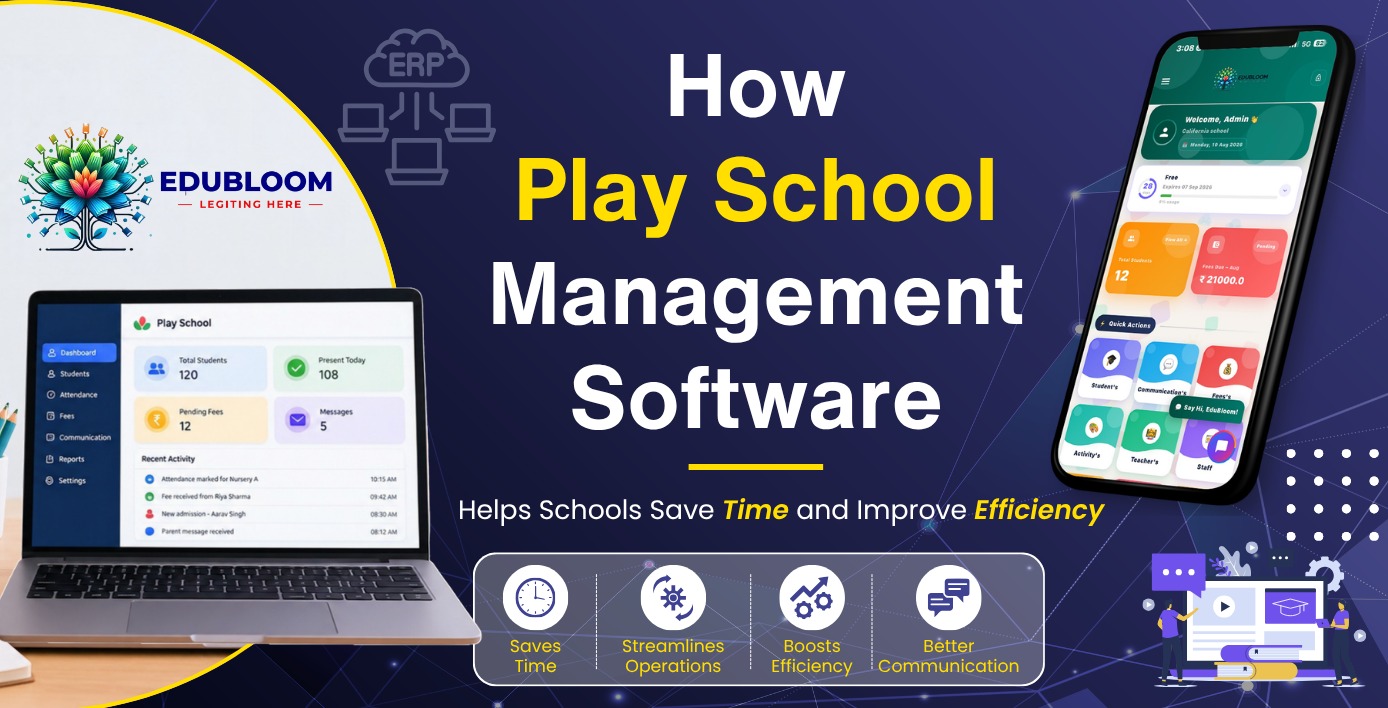
How It Helps Schools Save Time and Improve
Efficiency Managing a play school involves much more than
planning classroom activities. Teachers handle attendance, student records,
parent communication, fee details, daily schedules, and child-related
information. Administrative work can take a large part of the school staff’s
day.
Play School Management Software can bring these tasks into
one organized system and
reduce the time spent on routine work.
Why Play Schools Need Better Management Systems
How Play School Management Software Saves Time
1. Faster Attendance Management
Attendance is a regular task in every play school. Writing
names in registers and preparing
Attending reports manually can consume valuable time.
Digital attendance tools allow staff
to record attendance quickly and maintain organized
records.
Attendance data can be reviewed when needed without checking
multiple registers. Schools
can also maintain a clearer record of student attendance for
internal use and parent
communication.
2. Organized Student Records
A play school deals with a large amount of information about
every child. Student profiles
may include contact details, admission information,
attendance history, fee records, and
other relevant details.
Play School Management Software can store these records in
digital profiles. Staff can
find required information without going through physical
files. Organized records also make it
easier to update information when a child’s details
change.
3. Simple Fee Management
Fee collection involves tracking payments, pending amounts,
receipts, and payment history.
Manual records can make it difficult to maintain an accurate
picture of fee status.
A digital system can help schools record fee payments and
monitor pending amounts. Staff
can access payment details from the system and maintain
clearer financial records. Parents
can also receive payment-related updates through available
communication features.
4. Better Parent Communication
Communication between a play school and parents is an
important part of daily
management. Parents may need updates about attendance,
activities, notices, schedules, or
school events.
A management platform can provide a central communication
channel for school updates.
Staff can share information without relying on separate
notebooks, printed notices, or
scattered messages.
5. Easier Staff and Schedule Management
Play schools need well-organized schedules for classes,
activities, staff responsibilities, and
events. A digital system can help administrators maintain
schedules and assign
responsibilities in a structured manner.
Clear scheduling reduces confusion among staff members.
Teachers can have better
visibility of their daily tasks and planned
activities.

The Role of Preschool ERP in Daily School
Operations
Preschool ERP brings different administrative functions into
one connected system. It can
cover areas such as admissions, student records, attendance,
fees, communication, staff
management, and reporting.
The main value of a Preschool ERP lies in centralized
information. Staff do not need to
maintain separate records for every administrative activity.
School administrators can work
with data from one platform and keep daily processes more
organized.
A Preschool ERP can also support reporting. Administrators
may need attendance reports,
fee records, student information, or other operational
details. Digital reports can make this
information easier to review and maintain.
How Daycare Management Software Supports
Childcare Operations
Many play schools also provide daycare services. Daycare
operations involve attendance
tracking, child information, parent communication, staff
schedules, and daily activity records.
Daycare Management Software can help organize these tasks
within a digital platform.
Staff can maintain child records, track attendance, manage
schedules, and communicate
important updates with parents.
Childcare environments require careful record management. A
structured digital system can
reduce paperwork and give staff more time for activities
that require direct attention to
children.
Improving Efficiency Through Automation
Repetitive administrative tasks can take up a significant
amount of staff time. Data entry,
attendance records, fee updates, notices, and reports are
common examples.
Automation can reduce the amount of manual work involved in
these processes. A
management system can handle routine record updates and make
information available
when staff need it.
Play School Management Software also reduces the need
to maintain the same
information across multiple files. A single digital record
can be updated and accessed by
authorized staff members. This can help reduce duplicate
entries and avoid confusion
caused by outdated information.
Better Data Access for School Administrators
School administrators need accurate information to manage
daily operations. Paper records
may require time to organize, search, and update. Digital
records provide quicker access to
important details.
An organized system can help administrators monitor
attendance, fees, student records,
staff schedules, and communication activity. Access to
structured information can support
day-to-day planning and administrative decisions.
Data security is another important part of digital
management. Schools handle sensitive
information related to children and families. Access
controls, secure logins, and responsible
data practices should be considered when selecting a
management platform.
Creating a More Organized School Environment
Efficiency is not only about completing tasks faster. It
also involves creating clear processes
that staff can follow every day.
Play School Management Software can bring consistency to
routine activities. Staff can
follow digital workflows for attendance, fee management,
communication, and record
keeping. New staff members may also find structured systems
easier to understand than a
collection of separate registers and files.
A well-organized management process can create a smoother
experience for administrators,
teachers, and parents. Staff can focus more on classroom
activities and child care instead of
spending large portions of the day on paperwork.
Choosing the Right Software for a Play School
Every play school has different operational needs. A small
school may need basic student,
attendance, fee, and communication features. A larger school
or a centre offering daycare
may require broader administrative tools.
Before selecting a system, school management should consider
ease of use, available
features, data security, mobile accessibility, reporting
options, customer support, and
scalability.
The software should fit the school’s existing workflow
rather than create unnecessary
complexity. Staff members should be able to use the system
without extensive technical
knowledge.

Conclusion
Play school administration involves many routine tasks that
require accuracy and regular
attention. Digital management tools can bring these
activities into one organized platform
and reduce manual paperwork.
Play School Management Software can support attendance,
student records, fee
management, parent communication, scheduling, reporting, and
other administrative
activities. Preschool ERP can connect multiple school
functions within a centralized system.
Daycare Management Software can support childcare operations
that require regular
attendance, record-keeping, scheduling, and parent
updates.
A suitable digital management system can help schools use
staff time more effectively, keep
information organized, and maintain smoother daily
operations.
Get the latest school listings, updates, and education tips straight to your inbox.
